Asem Mohiuddin
Last week on Wednesday Ajay and his family from Kerela wrapped up his short visit to Kashmir. He had visited the valley for just four days to fulfill the promise with his wife of taking her to Kashmir. “It was just to fulfill the promise I had made to my wife when we married. But I think four days are very less to explore the places in Kashmir,” said Ajay while boarding a taxi to catch the flight at Srinagar Airport. “We are returning soon and for a longer time,” he waved off to his cab driver who befriended the tourist couple during their stay in the city.
The tourism department claims that tourist footfall in Kashmir is unprecedented and broke all past records of 10 years. Winter tourism witnessed a boom and winter tourist spot Gulmarg alone crossed the mark of 3 lakh visitors.
Every day, the tourism department data reveals that 3000 to 4000 tourists visit the valley, a number that is quite encouraging. In the past three years, the tourism industry has suffered enormous losses due to global pandemic COVID19 and earlier enforced shutdown by the government after article 370 provisions were abrogated in 2019.
After the horticulture sector, Tourism is the second largest economic sector of Jammu Kashmir and provides job opportunities to over 6 lakh people.
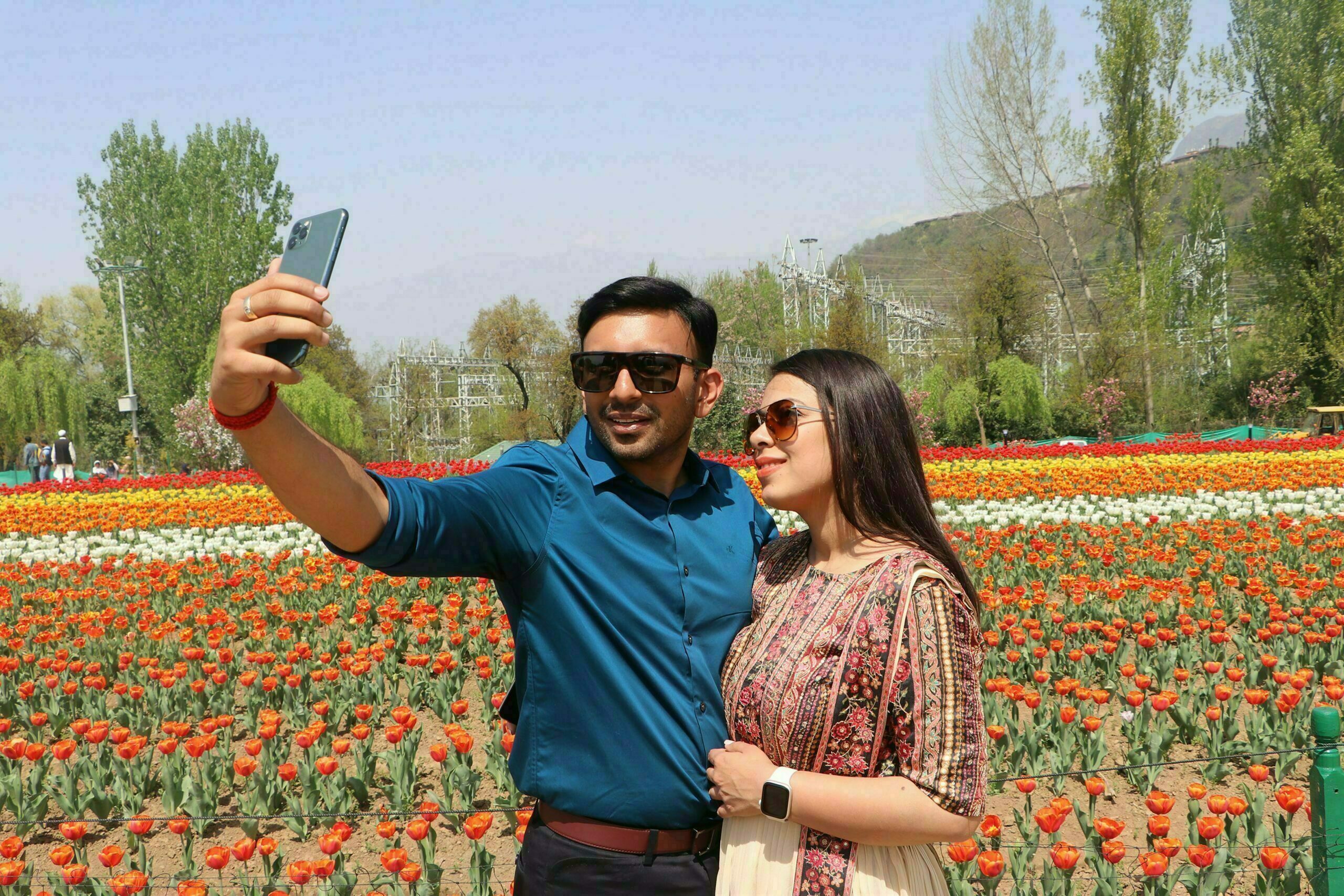
The tulip garden, however, seems the main attraction for tourists in the early summer which has been closed on April 18 now. More than 3 lakh tourists have visited Asia’s largest Tulip garden following the rigorous campaigning by the concerned department.
“The visit to the Tulip garden will be memorable for all of us. Quite natural and beautiful scenery is here,” said Rashika from Mumbai. Rashika feels the Tulip garden in Kashmir is much more beautiful than the same gardens in Europe. “You have a marvelous hill range on its back and the world famous Dal Lake at its feet. In the middle you have unending tulip flowers of different colors with natural fragrance. Nowhere in the world you will find this combination,” she smiles and poses for a photograph in a traditional Kashmiri attire.
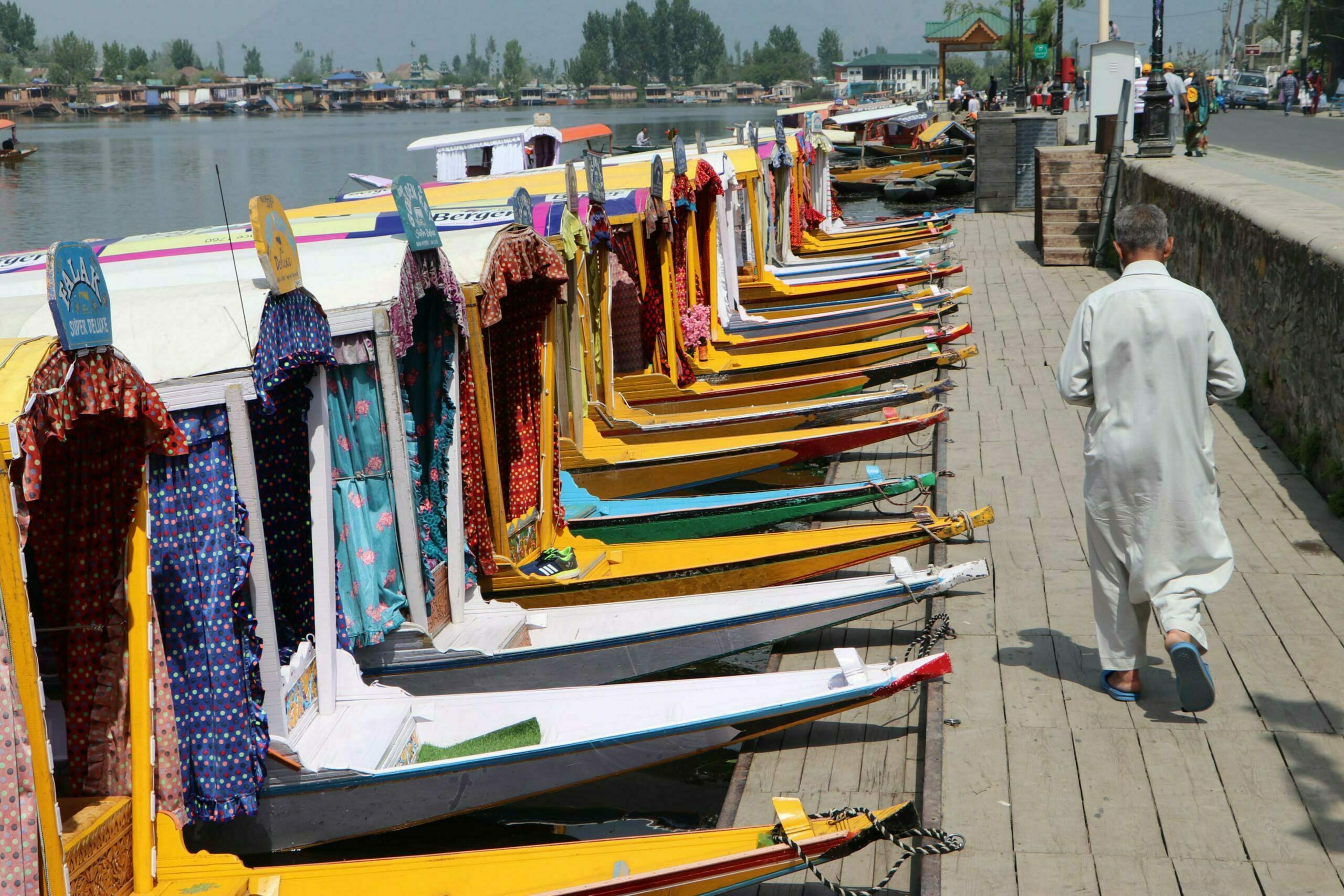
The UT government is taking all its efforts to promote the tourism industry in Kashmir which had almost died in the last three years. Most of the hotels in Kashmir are booked for the season and long queues could be spotted alongside the Dal Lake, thus bringing a smile on the faces of all stakeholders.
The government of India which directly rules Jammu and Kashmir after bifurcating it into two Union territories Ladakh and Jammu Kashmir claims that alone in March 1.8 lakh tourists have arrived in the valley.
It further states that Srinagar airport on daily basis has 50 departures which suggest the rush of tourists in Kashmir.
The JKUT, however, is targeting the production houses of the country to visit Kashmir and offers discounted rates on government owned hotels and restaurants.
“The production houses of the country may avail upto fifty per cent discount at our hotels during their stay if they come to work here,” said the senior tourism official who wished not to be named since he was not authorized to talk to the media.
“We believe if the production houses come here and shoot the serials and movies, it will help us in a long way to promote our destinations in the country and across the globe.”
The official, however, said that they have received many proposals from the production house who aims to shoot the web series or serials. “But Bollywood is yet to respond to our offer.”
Since tourism is the main focus of the economy for the government, it is trying to diversify the sector. Many new destinations are being promoted especially in the Chenab and Pir Panjal sectors. The officials say that despite having potential to attract the visitors, it has been overlooked by the successive regimes and the sector was centralized and focused on parts of Kashmir only.
Poonch, Rajouri and other districts of Jammu are receiving equal attention now and many unexplored places are being projected on social media handles by the Tourism department.
New Trekking routes
The tourism department to diversify the activities for the visitors have identified 75 new treks in Kashmir. They are all unexplored and virgin treks for the adventurists.
“Our motto is to popularise these beautiful locations. Besides local trekkers, this also targets a specific group of tourists who love adventure travel. It will also create a livelihood in the villages on forest fringes through home-stays, nature guides, trek operators, food stalls and forest souvenirs,” Irfan Rasool, forest conservator North Kashmir told Hindustan Times.
“These 75 tracks have been identified by the Jammu and Kashmir forest department divided into six circles, Srinagar, South, North, East, West and Chenab circles, with each circle having more than 10 identified trekking routes with maps and everything. The north circle comprises Baramulla and Kupwara districts and has the highest 26 identified routes -some close to the Line of Control,” he added.
Foreign tourists
Meanwhile, the foreign tourists are giving a miss to Kashmir this time. Of the 3. 5 lakh visitors only some 500 foreign tourists have arrived in Kashmir so far this year. The officials are blaming the COVID 19 wave and travel advisories by the European and American governments. The disturbing trend is that the number is further declining which is alarming and an end to the quality tourism of Kashmir. When the dollars are arriving here, the economy is growing so we need to convince the foreign travelers that Kashmir is safe to travel,” the tourism authorities said. “They however, said that it is all possible if the Ministry of External Affairs take up the matter with their counterparts in these countries.