Asem Mohiuddin Exposing Fiasco
From the civil secretariat Srinagar, a just 10 kilometers of straight drive via congested markets of city leads you to a Wathora village in northern district Budgam of central Kashmir.
This village is quite popular among the people since it homes a marginal population of Baends, folk musicians who have been entertaining people in Kashmir for decades, if not centuries.
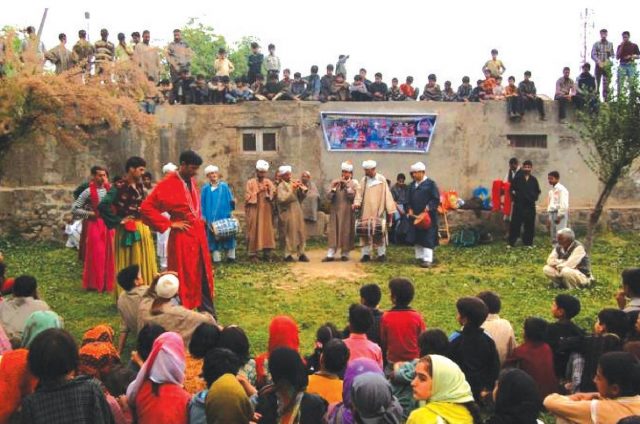
While the folk culture across the Kashmir vanished with the emergence of militancy in 1990’s, Wathora sets the hope for its revival notwithstanding the economic difficulties the concerned population faced in all these years. Despite having such a rich and great past, Wathora never caught the attention of the successive regimes. Even recently during the “Back to village” initiative, the officers visited the village on the last day of the campaign on 27 June.
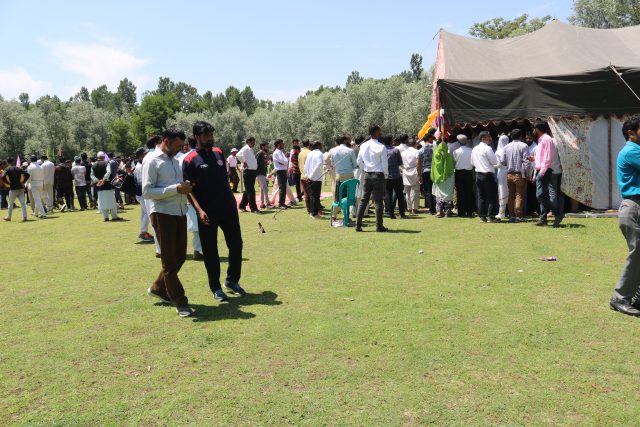
Meanwhile, the “Back to village” initiative has set the hopes high for the habitants who feel dejected and neglected by the successive governments. Under this back to village campaign, the villagers set plethora of demands on the table of visiting officer Sarmad Hafeez, secretary of Youth services and sports (J&K). Hafeez was assigned to station in village along with his subordinates and give the patient hearing to the issues of people. As Hafeez along with his team was touring the village, he faced harsh and chilling realities speaking volumes about the official apathy towards public issues. Sarmad Hafeez and his director Youth services and Sports, Dr Saleem U Reham was taken by the locals to a nearby ground to inaugurate the cricket match. The concerned department had organized the match and distributed some uniforms to the participants. The splendid playground almost a size of an international cricket stadium surrounded by Doodh Ganga stream by all four sides left the officials awestruck.
“I am leaving highly inspired. The stadium of this size and beauty is something that caught my eyes. We will definitely work to encash its size and beauty to develop it. So I would request concerned Deputy Commissioner to handover this stadium to the Youth services and sports department,” he told the gathering while inaugurating the cricket match.
Mughlee, an old local woman who is also politically active revealed the harsh reality beneath this beauty of playground.
She immediately points towards the wooden log bridge that was built overnight for the convenience of officers visiting the ground. Prior to this bridge, according to Mughlee there was no facility and a boat was used by locals, not without paying with lives.
“So far 7 people have lost the lives while crossing the stream to reach ground. Just two years back two young boys from Srinagar who had come to play the cricket here drowned into the stream while crossing in absence of proper bridge,” she recalls.
Mughlee said that even after this huge tragedy, it failed to catch the attention of government.
This is one issue in a long list that people of Wathora have. They demand roads, electricity without unscheduled cuts, safe drinking water, quality education and better health care facilities.
Prior to this initiative of “Back to village”, Wathora’s wish list had no one to hear and people had held the wishes to their chests.
“We are thankful to governor Satya Pal Malik who began with this amazing initiative and sent the officers at the door step of people. Otherwise it is impossible for most of the people to reach out to the officers at their offices and get their issues addressed,” said Dr Raja Muzaffer Bhat, renowned social activist, who also hails from the village.
Bhat has been on forefront in organizing the meetings of officers with people and insists on community based participation for the socio economic development of rural areas.
“We need to get people engaged if we need robust development of rural areas,” he said.
“If a village that is just some 10 kilometres away from the Chief Minister’s office have such apathy, you can imagine what would be the plight of far off rural areas where the administration is invisible. “Back to village” is the right initiative and it needs to be extended to understand ground realities,” said Abdul Rehman, a villager who also joined the programme to plead for some public issues.
Locals demand more such initiatives to sustain the contact between government and people for the progress and prosperity of state.
“We need to sustain such initiatives not only to understand the issues people facing at ground level such steps will also ensure the community based participation along with the employment of local Panchayats and subsequently the common people,” insists, Nazir Ahmad, a Sarpanch at Kanispora village.
Sarmad Hafeez also shares the same opinion. “I am inspired after visiting the village at Wathora. No one asked for personal favours and everyone wanted overall development of village. So Back to village initiatives shall be followed further,” he said.
Back to village: changing pattern of governance
While it has been proven across the world that any governance has succeeded only after the participation of community, the administration in Kashmir has been defunct ever since the militancy erupted in valley. In the last over three decades of turmoil, with in the political and administrative circles, the corruption, nepotism and unaccountability grew enormously.
The conflict served grapevine for the corrupt politicians and babus and evaded accountability while making their fortunes. Owing to this fiasco, the state government machinery was left defunct. While the politicians and officers grew more powerful, the common man was denied and deprived of their basic rights.
In fact the bitter truth was when a common man was forced to travel upto 100 kilometres to seek an appointment with Babu for pity issues at civil secretariat. They would be forced to stay outside civil secretariat till 1: 30 pm in scorching heat before being allowed to enter into the premises. The visit of secretariat level officers was a rare scene until recent past now and the present trend suggests a positive change in the government’s attitude.
“If you want to revive and rejuvenate the public sector and ensure the proper developmental activities are taking place, the initiatives like “Back to village” needs consistency with same fervour and energy,” said Abdul Majeed, who served in rural development department. “Otherwise, there have been no less initiatives in past what they lacked was a political will not funds.”